



Your resume opens the door U.S. senior care is struggling to keep shut
American nursing homes and senior care communities are short-staffed in a way that isn't temporary. Ninety-nine percent of nursing homes report open positions, and 89% are actively trying to hire registered nurses, according to the American Health Care Association. Nearly half of nursing homes have had to limit new admissions, and 57% are keeping waiting lists, simply because they can't find enough staff. That gap is where your resume becomes relevant.
Once you've passed the NCLEX-RN and met your state Board of Nursing's licensure requirements, your resume is what turns that qualification into interviews. A strong resume tells a U.S. senior care employer, quickly and clearly, that you have the clinical skills and the temperament for geriatric care work, before they ever meet you.
None of this guarantees a job or a visa. It takes a well-built resume, real experience, and follow-through on the licensure steps ahead of you. What it does mean is that the demand is real, and employers are looking for candidates like you.
This is also where Global Care Recruiters comes in, helping Kenyan nurses translate their clinical background into a resume U.S. senior care employers recognize and respond to.
How to list your NCLEX-RN result and license accurately
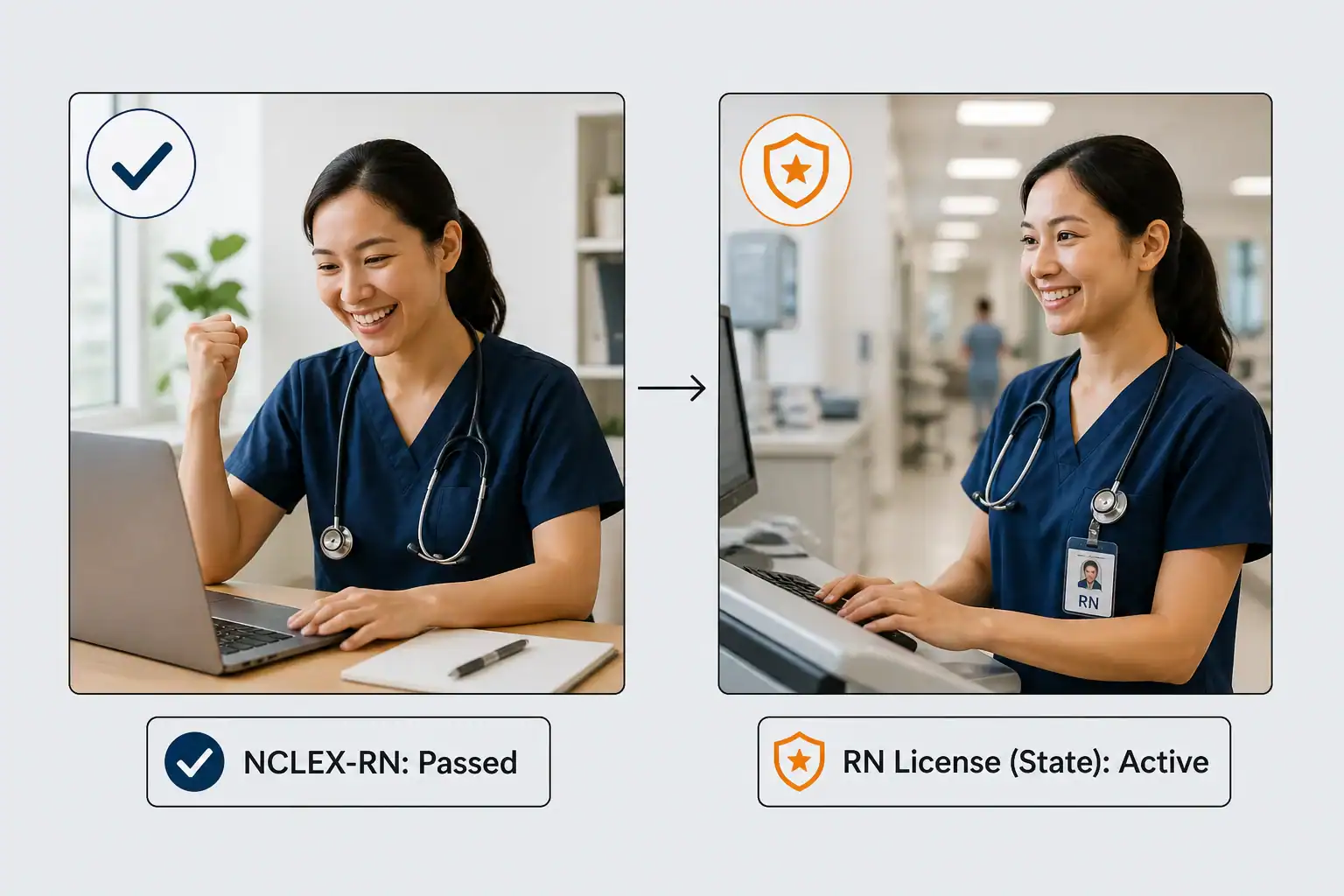
Passing the NCLEX-RN shows you met a national competence standard, but it does not by itself authorize you to practice. Every RN license is issued and regulated by a state board of nursing, and internationally educated nurses typically go through that state's requirements for a first license, which often includes a credential evaluation from an approved agency comparing your Kenyan nursing education to U.S. standards.
On your resume, list these as two separate lines: your NCLEX-RN status (for example, "NCLEX-RN Passed, 2024") and your licensure status by state ("RN Licensure in Progress, [State]" or "RN License, [State]" once issued). Avoid wording that implies passing the exam alone means you're licensed to work. If you later apply in a second state, that typically happens through licensure by endorsement rather than retaking the exam.
Keep this section factual and current. It's a small detail employers and recruiters check closely.
Clinical skills to highlight, and how to prove each one
Senior care employers read resumes differently than hospital recruiters do. They want to see that you can manage chronic conditions over time, catch subtle changes in frail patients, and work with less on-site physician backup. Generic phrasing like "provided nursing care" won't tell them that.
Patient assessment. Show that you can spot slow decline, not just acute crisis. Instead of "performed assessments," write something like "conducted daily head-to-toe assessments for 15-20 residents, identifying early signs of UTI and dehydration before escalation."
Infection control. Long-term care facilities deal with outbreaks (flu, C. diff, respiratory illness) that spread fast in shared living spaces. Mention specific practices: "maintained infection control protocols during a facility-wide flu outbreak, including isolation precautions and staff education."
Medication administration. Senior residents are often on complex, multi-drug regimens. Reference polypharmacy management directly: "administered and monitored medications for residents on 8+ daily prescriptions, watching for interaction risks and side effects common in elderly patients."
Vital signs monitoring. Frame this around trend-tracking, since that's what matters in long-term care: "tracked vital signs and weight trends to flag early cardiac or respiratory changes in residents with chronic conditions."
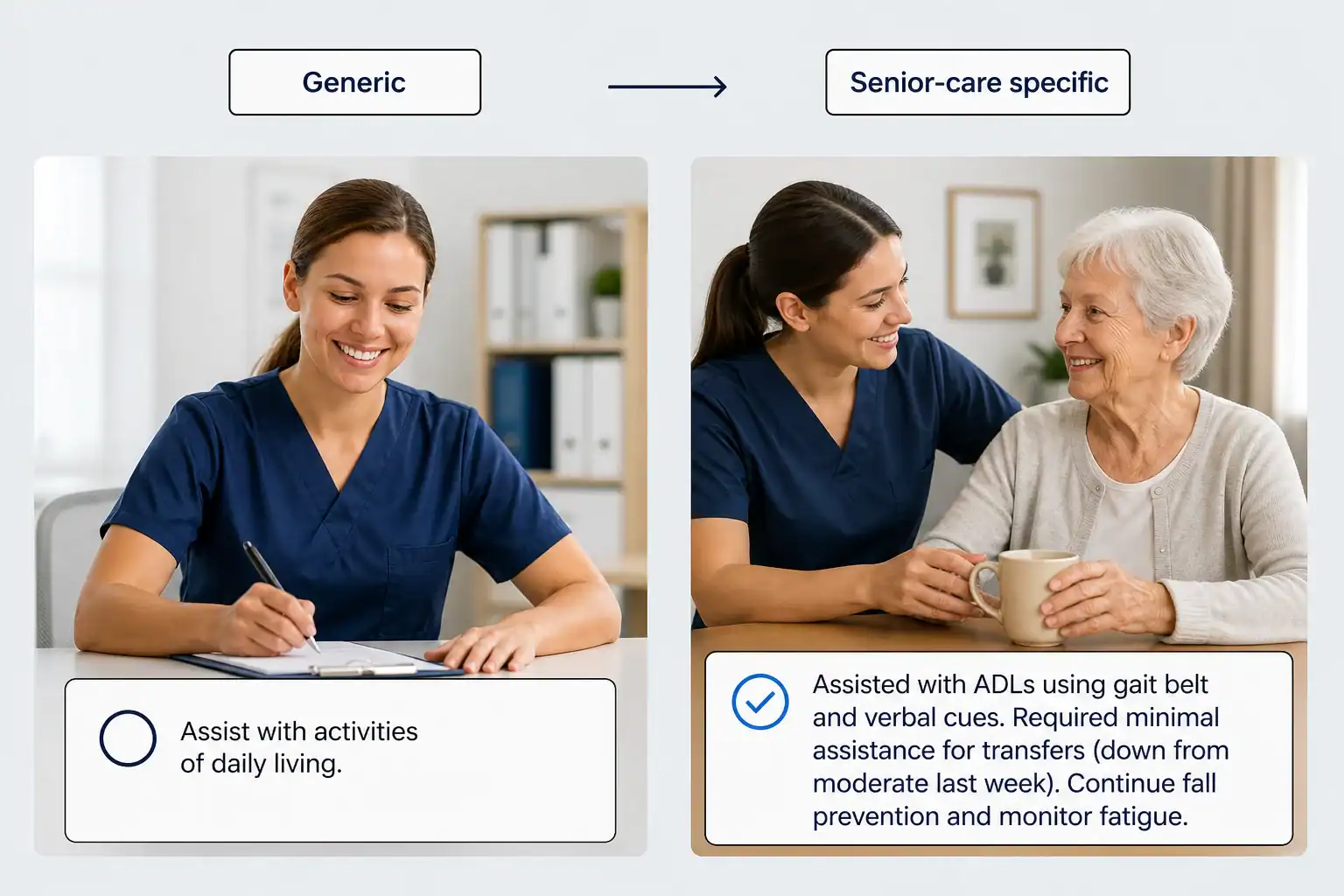
Wherever possible, attach numbers: how many residents, what shift, what condition prevalence. A hiring manager scanning dozens of resumes for a shortage they're feeling firsthand, given that U.S. nursing homes report persistent, severe staffing shortages, needs to see quickly that you understand geriatric patient loads, not just clinical tasks in the abstract.
Soft skills employers want proven, not stated
Senior care communities run on relationships as much as clinical tasks. A resident with dementia may resist care from someone rushed or unfamiliar. Families call with questions daily. Aides and physical therapists need updates without a formal handoff meeting. Employers know this, so "excellent communication skills" on a resume tells them nothing. Show it instead.
Communication. Replace vague claims with specifics: "communicated changes in resident condition to physicians via phone and written reports, and updated families weekly on care plan adjustments."
Patient-centered empathy. Describe an approach, not a trait: "adapted care techniques for residents with dementia, using redirection and calm pacing to reduce agitation during bathing and dressing."
Teamwork. Name who you coordinated with: "collaborated daily with CNAs, physical therapists, and dietary staff to align care plans for residents with multiple chronic conditions."
Adaptability. Long-term care schedules shift constantly. Reference a real scenario: "adjusted care routines during short-staffed shifts, prioritizing high-risk residents while maintaining safety checks for the full unit."
Each of these lines does double duty. It shows the skill and gives the hiring manager a scene they can picture, which matters more in senior care than almost any other setting.
Show you can chart, not just care
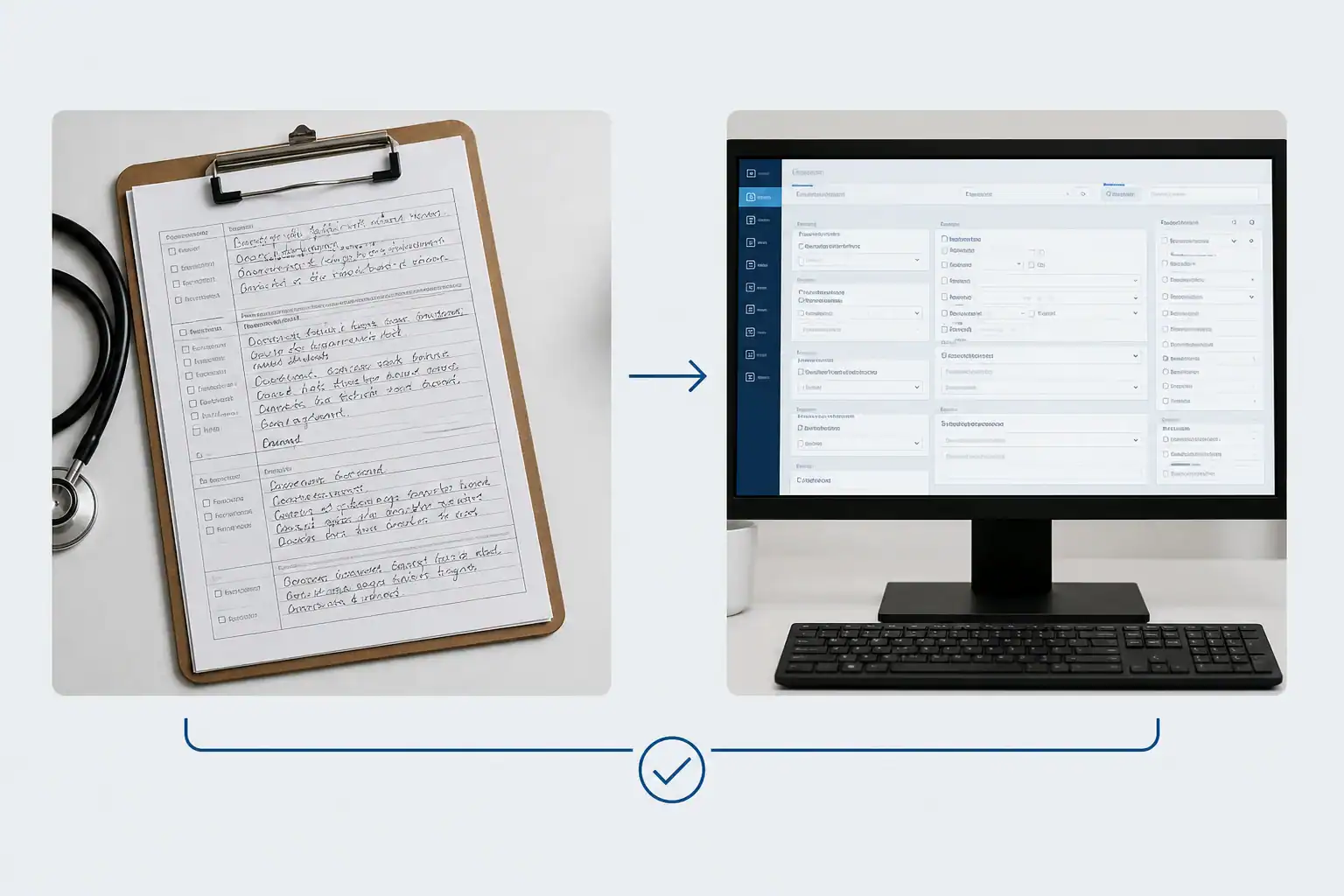
U.S. hospitals, skilled nursing facilities, and most senior care communities run on electronic documentation, not paper charts. Federal health IT reporting shows EHR use is standard across nursing homes and assisted living settings, and employers expect nurses to move through structured charting, order entry, and care plan updates without extra training on the basics.
If you trained on a different system in Kenya, say so honestly, but frame what transfers: documenting assessments using structured templates, recording interventions and outcomes in real time, and communicating changes through the chart rather than just verbally. A line like "documented patient assessments and interventions using structured electronic and paper-based systems, ensuring accurate and timely records for interdisciplinary care" works whether your prior system was Epic or a facility-built platform. What matters to employers is that you understand structured, timely, accurate documentation as a professional habit, not just software familiarity.
Turning medical-surgical or ICU work into geriatric relevance
Most Kenyan nurses applying to U.S. senior care communities come from medical-surgical, ICU, or general ward backgrounds, not dedicated geriatric units. That is fine. What matters is pulling out the parts of that experience that map onto elderly residents: chronic disease management, mobility and fall risk, cognitive changes, and coordinating care for patients with several conditions at once.
If you managed post-op patients with diabetes and hypertension, say so directly: "managed post-surgical recovery for patients with multiple chronic conditions, including diabetes and hypertension, adjusting care plans for age-related risk factors." If you worked with stroke patients or those recovering from fractures, mention mobility support and fall prevention, both daily concerns in assisted living and skilled nursing settings.
Avoid listing duties with no age context. A line like "provided wound care" says less than "provided wound care for patients with slow-healing injuries related to diabetes and reduced mobility, common in elderly populations." The second version tells a senior care employer you already understand their residents before you walk in the door.
Getting your resume in front of the right employers
Writing the resume is only half the work. Getting it seen by a U.S. senior care employer that's actually hiring is the other half, and that's where we come in.
We're more than a resume review service, we're your placement partner from the first draft to your first day on the job. Our team reads your resume the way a U.S. senior care employer will: looking for the specific language, phrasing, and proof points covered in this guide. If a bullet point is too vague or missing senior-care context, we'll tell you exactly how to fix it before it ever reaches an employer's desk.
From there, we match you to openings based on your clinical background, licensure progress, and career goals, then coordinate interviews with U.S. senior care communities actively looking to hire. We also support the pieces around the resume: credentialing questions, understanding where you stand in the immigration process, and preparing for relocation once you have an offer in hand.
We won't promise a specific visa outcome or timeline. What we will do is make sure you're not figuring this out on your own.
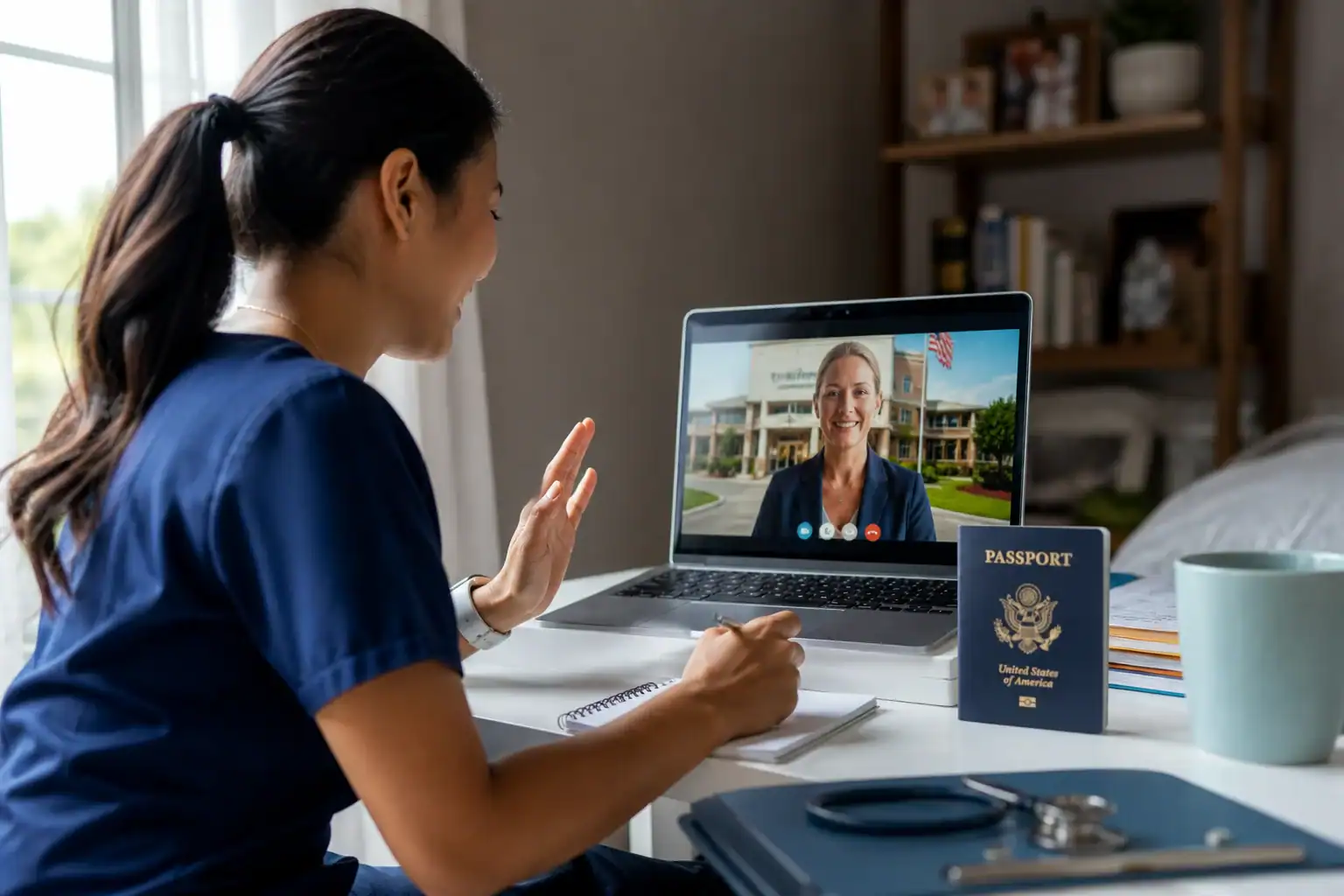
If you've passed the NCLEX and want help turning that into a resume employers respond to, apply today and let's talk about where you fit.
Common questions before you apply
Should I list "NCLEX-RN Passed" if I don't have a U.S. state license yet? Yes. List both separately and honestly. Employers in senior care are used to reviewing candidates at different stages of the licensure process.
Do I need U.S. work experience before applying? No. Employers care more about how you frame your existing clinical experience, especially anything involving elderly patients, chronic conditions, or long-term care.
How long does the process typically take? Timelines vary by state and individual case. Immigration and credentialing steps commonly take 18 to 24 months, which is standard for international nurse relocation.
What does Global Care Recruiters actually do for me? We review your resume, match you to senior care openings, and support you through credentialing and relocation logistics. We don't control visa timelines or legal outcomes, but we make sure you're not navigating the process without guidance.
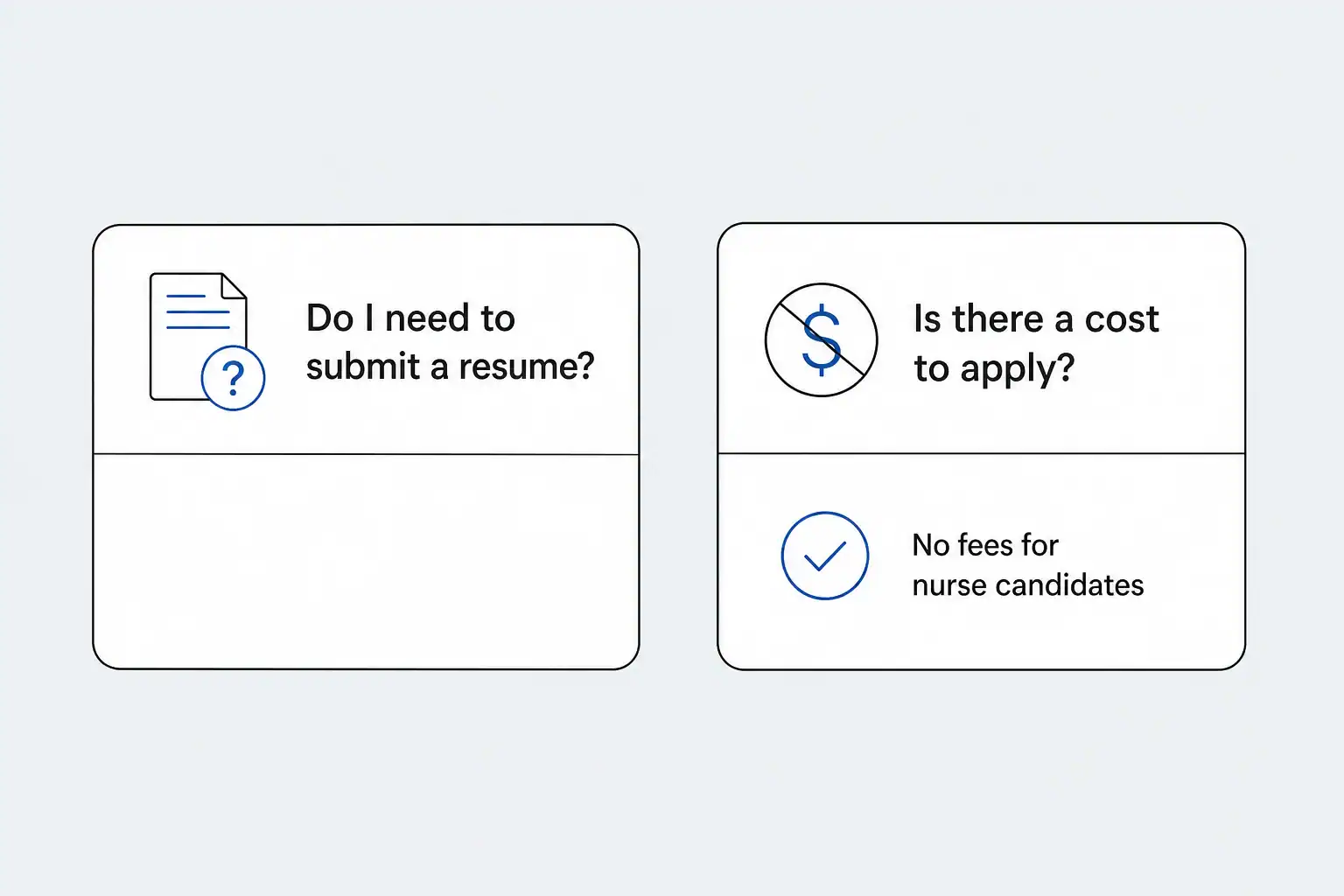
Is there a cost to work with you? No. There are no fees for nurse candidates.
Sources
- State Of The Sector: Nursing Home Labor Staffing Shortages Persist Despite Unprecedented Efforts To Attract More Staff — American Health Care Association

0 Comments