


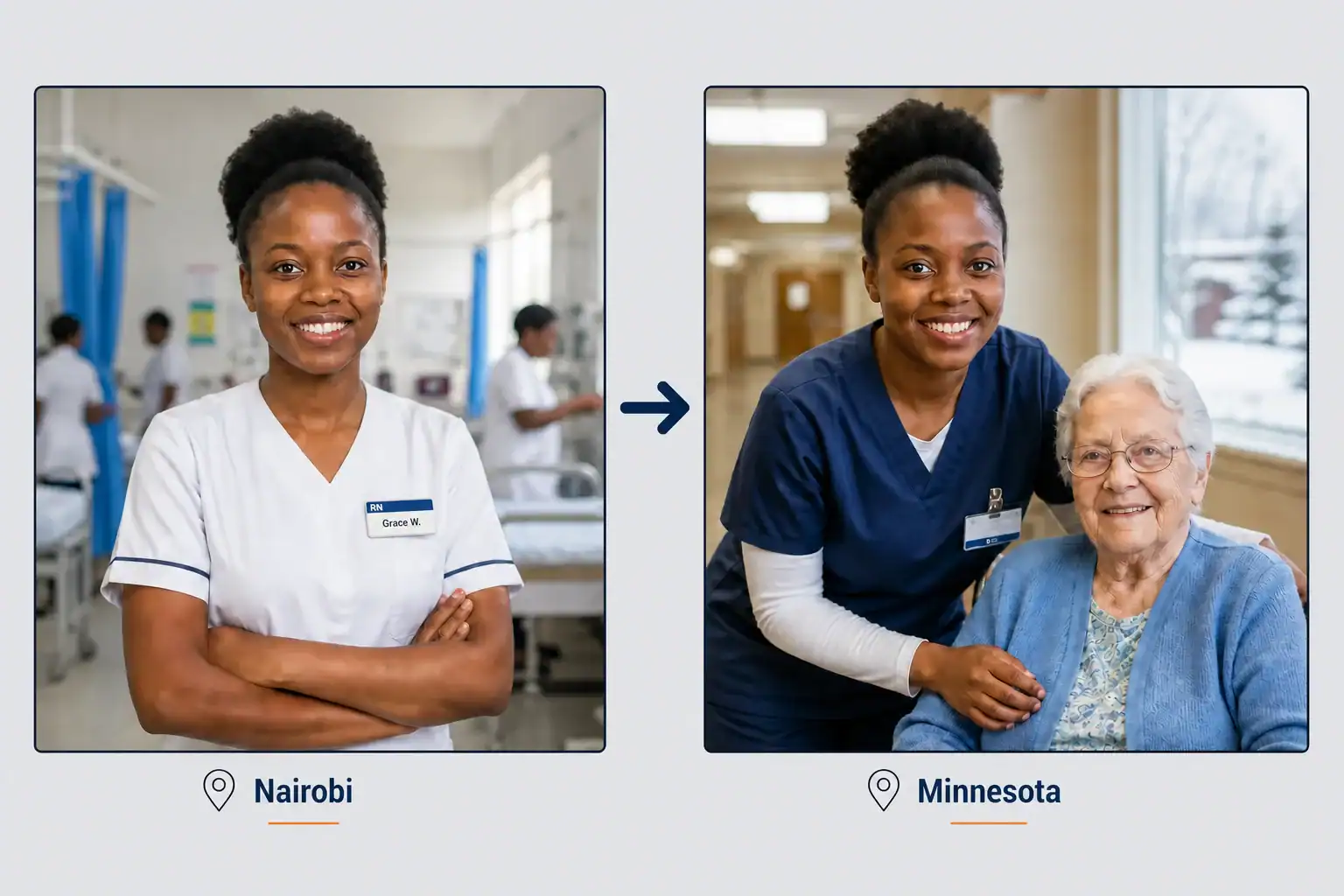
Global Ageing Network puts a Minnesota-Kenya recruitment model in the spotlight
Global Ageing Network, a membership organization connecting aging-services groups worldwide, recently published a feature on one recruitment partnership working to fill nursing vacancies in senior care. The article, titled "A Great Win-Win: Members Partner on Global Recruitment to Address Workforce Needs," looks at how Global Care Recruiters built a pipeline moving NCLEX-licensed nurses from Kenya into senior care roles across Minnesota.
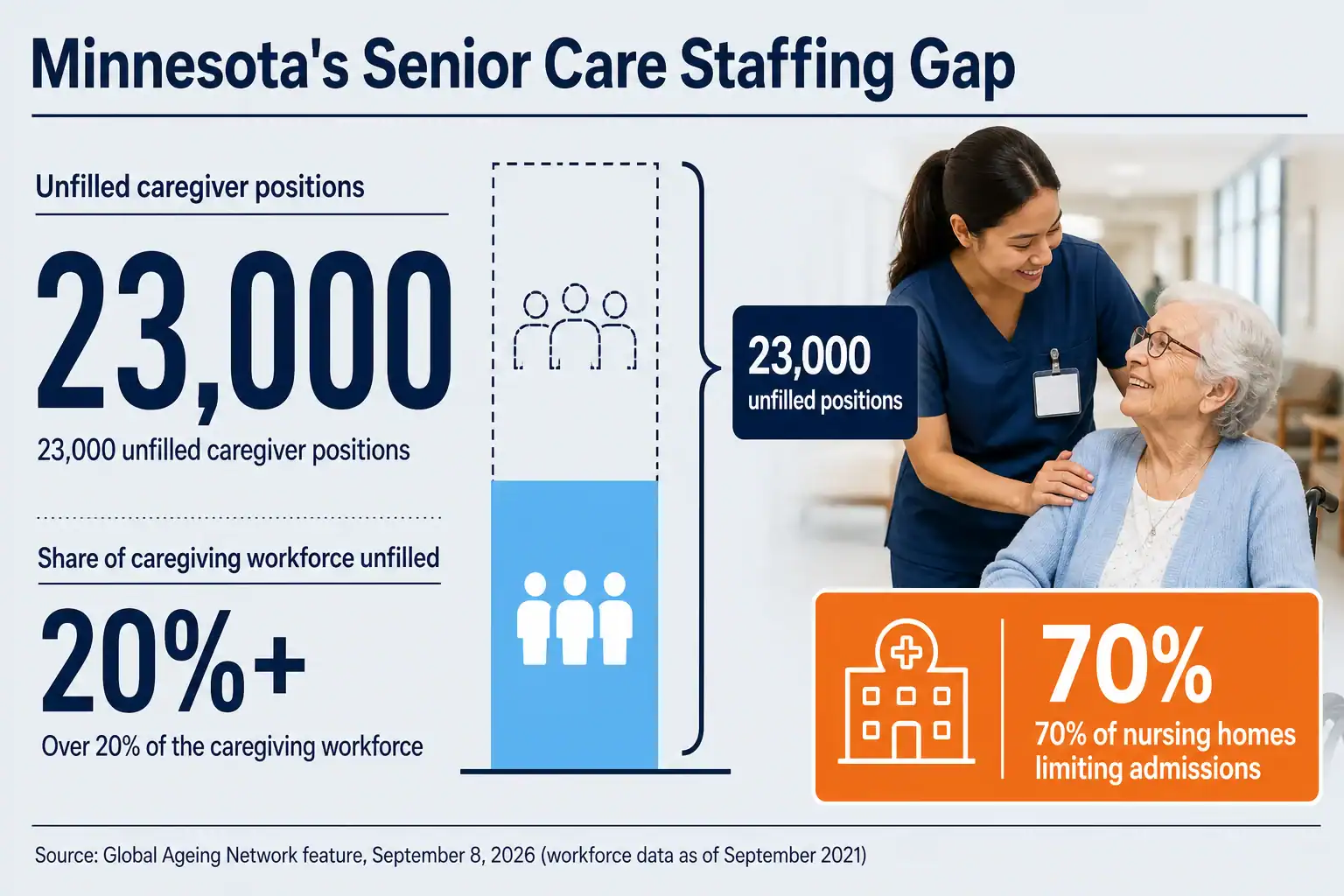
The timing lines up with a shortage that has been building for years. LeadingAge Minnesota reported roughly 23,000 unfilled caregiver positions in the state as of September 2021, over 20% of the caregiving workforce, with 70% of nursing homes limiting admissions because they couldn't staff them. By 2022, MPR News reported that about 20% of nursing home jobs statewide were still open, a gap tied directly to facility closures and admission restrictions.
That's the backdrop the Global Ageing Network article is working against, and why a direct-hire, senior-care-specific recruitment model drew outside attention in the first place. What follows recaps what the feature found, starting with how the partnership got off the ground.
From a Nairobi delegation to a Minnesota partnership
According to the Global Ageing Network feature, GCR traces back to a single trip. In January 2024, LeadingAge Minnesota and State Representative Mohamud Noor led a delegation to Nairobi to attend the opening of a new NCLEX testing center. Traci Larson of Guardian Angels, Dustin Lee of Prairie Senior Cottages, and Roger White of Mount Olivet were on that trip, and seeing the testing center gave them the idea for a direct-hire pipeline connecting NCLEX-licensed Kenyan nurses to Minnesota senior care jobs.
Jim Bettendorf of Vista Prairie Communities joined the group afterward, at a Minnesota event, rounding out the founding team to four. By August 2024, the four organizations, Guardian Angels Senior Services, Mount Olivet Careview Home, Prairie Senior Cottages, and Vista Prairie Communities, had formally launched Global Care Recruiters, built around recruiting NCLEX-licensed Kenyan RNs through EB-3 visa sponsorship.
The article frames this as something distinct from typical staffing arrangements: four competing providers choosing to build a shared recruitment company rather than each chasing the same small pool of candidates alone. That framing, four senior care operators pooling resources around one country and one credential, sets up the model's central claim, which the feature spends the rest of its reporting on: this isn't a stopgap contract staffing fix, but an attempt at a repeatable pipeline.
No hidden staffing markup, no generic candidate pool
The Global Ageing Network feature draws a clear line between GCR and a typical staffing vendor. GCR was built by senior care providers, for senior care providers, which means the organization isn't sourcing nurses for hospitals, surgical centers, or whichever client pays fastest. Every recruit is matched specifically to geriatric and long-term care roles.
Traci Larson, one of the founders, told Global Ageing Network that this senior-care-only focus sets GCR apart from other immigration recruitment businesses, most of which spread candidates across whatever healthcare sector has openings. GCR doesn't.
The article also points to something less common in this industry: attention to what recruitment does to the source country. GCR describes weighing whether Kenya can still meet its own healthcare staffing needs while nurses are placed abroad, a consideration Global Ageing Network frames as central to ethical sourcing and consistent with broader calls for balanced foreign-born worker policies.
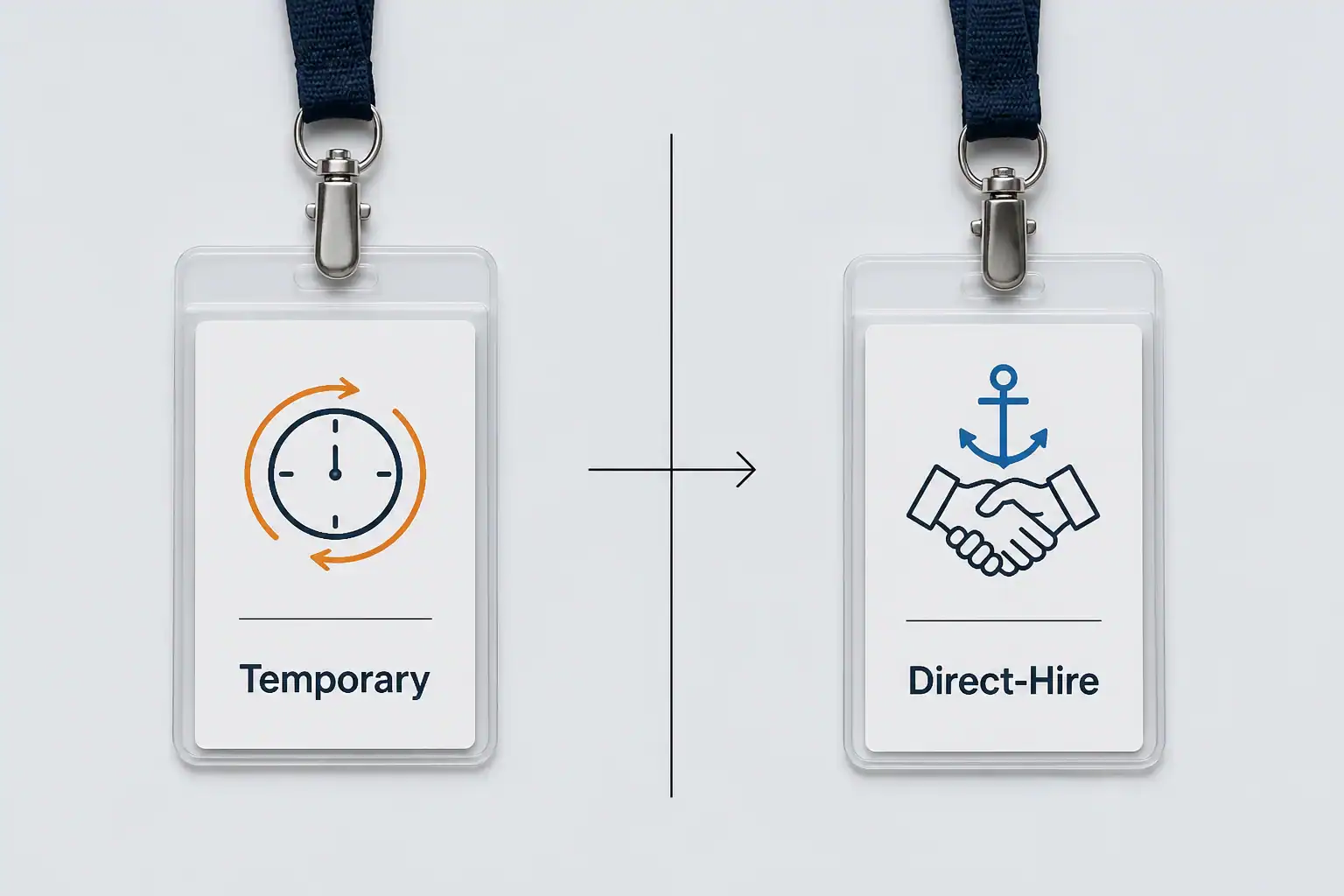
GCR positions itself as a direct-hire partner rather than a staffing agency. No temp contracts, no markup fees layered onto facilities, no revolving door of short-term placements. Nurses are hired for long-term roles, and GCR says it covers immigration-related costs so recruits don't take on debt to get here.
Whether this approach outperforms conventional staffing models on cost or retention isn't something the available reporting measures. What it does show is a recruitment company built around one sector and one set of long-term obligations, not a general-purpose vendor spreading candidates thin.
The numbers behind the growth
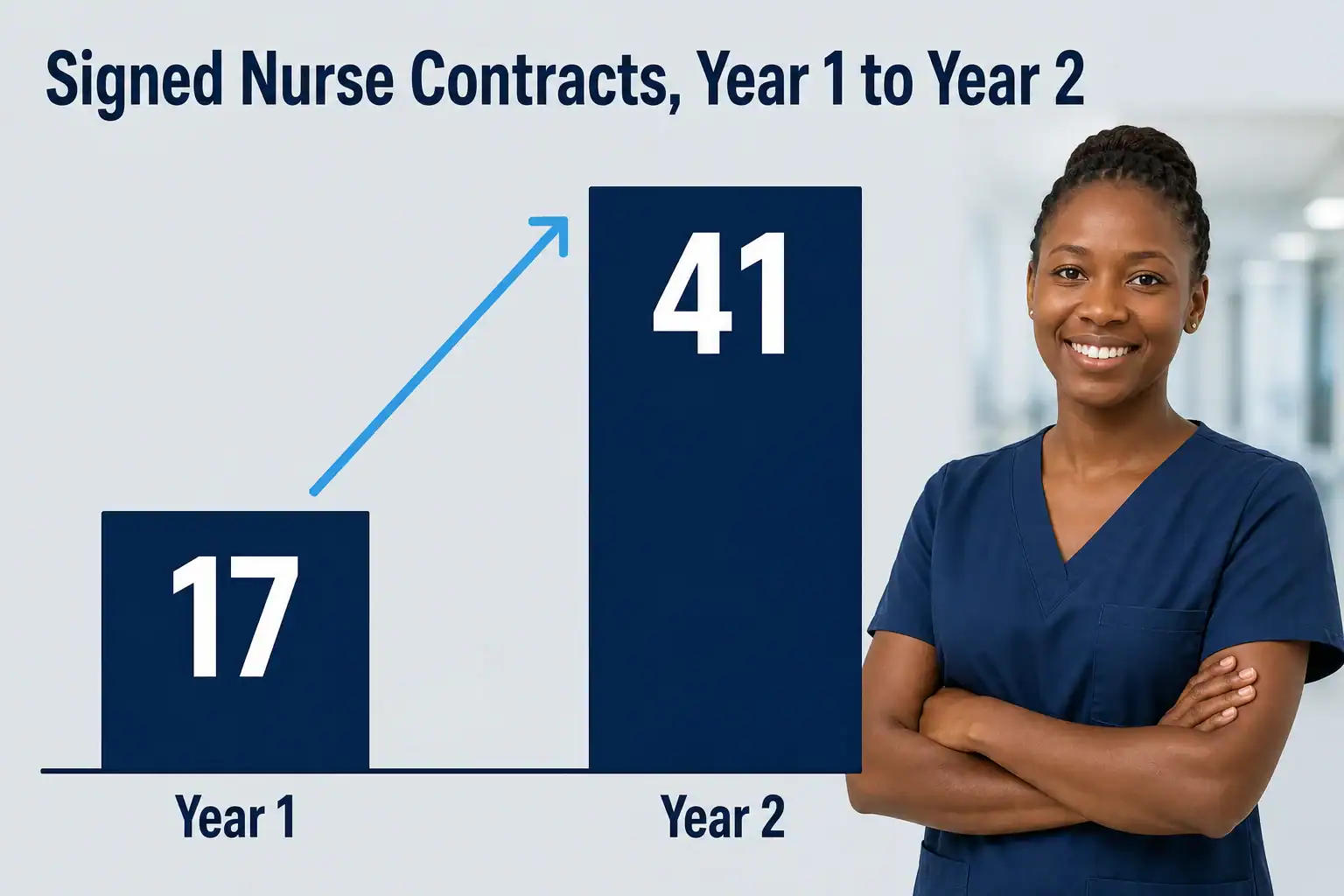
GCR signed contracts with 17 nurses in its first year of operation. In its second year to date, that figure has grown to 41 nurses. That is more than double the prior year's total, and the second year isn't finished yet.
Behind those signed contracts sits a larger pipeline. More than 100 candidates are currently moving through legal review and employer interviews. Separately, GCR reports more than 60 registered nurses from Kenya in its pipeline to come to the United States. These two figures shouldn't be added together. The source doesn't say whether they overlap, so treat them as two separate snapshots of activity rather than a combined total.
It's worth being precise about what these numbers represent. The 17 and 41 figures are signed contracts, not confirmed arrivals or employment start dates. Nobody has published retention data yet, and there's no audited record breaking down how many of these nurses are actually working in Minnesota senior care facilities today. What's documented is contract signing and pipeline volume, which is a reasonable proxy for demand and momentum, but not the same as a completed placement count.
Still, the trajectory is the headline. Year one to year two shows real growth, and a pipeline in the dozens to low hundreds suggests this isn't a one-time push.
LeadingAge Minnesota lends its name and infrastructure
The Global Ageing Network feature also points to a formal partnership: on July 8, 2026, LeadingAge Minnesota Solutions and GCR announced a strategic partnership to expand ethical international nurse recruitment for aging-services providers.
LeadingAge Minnesota is the state's largest association of aging services organizations, representing more than 1,350 organizations and nearly 225 business partners, and serving close to 53,000 seniors a day. Its Solutions arm runs the group's vendor and purchasing programs, generating revenue that funds education, advocacy, and training for members. Under the new arrangement, LeadingAge Minnesota Solutions provides executive leadership and operational support to GCR, while GCR keeps its own governance.
For a two-year-old recruitment operation, this is a meaningful stamp of approval. It puts GCR inside the infrastructure of an association that Minnesota senior care providers already trust for purchasing and workforce services, rather than leaving it to sell itself cold to each new facility.
Beyond nurses, beyond one country
Registered nurses were the starting point, not the ceiling. Co-founder Traci Larson has described plans to extend the same recruitment model to other roles senior care providers struggle to fill: nursing assistants, culinary and dietary staff, social services workers, and physical and occupational therapists, according to the Global Ageing Network feature.
The geography is also open to change. Larson has talked about recruiting from countries beyond Kenya and placing workers with providers outside Minnesota, summed up in the article's own phrase: "there are lots of opportunities, with Kenya and beyond."
None of this is locked in yet. The pipeline that exists today, more than 60 Kenyan RNs recruited over two years with over 100 more moving through legal review and interviews, is still specific to nursing and to one state's providers. Global Ageing Network reports the expansion as a stated intention, not a rollout with dates or named markets attached. There's no public timeline for when a culinary worker or occupational therapist from a second country might go through the same process GCR built for nurses.
What's notable is the direction rather than the details. A model built around direct employment and senior-care-specific matching, tested first with one job title and one source country, is now being talked about as a template other roles and regions could reuse. Whether that happens at the pace Larson envisions is something only the next couple of placement cycles will show. For now, the plan reported by Global Ageing Network is expansion in two directions at once: more job categories, and more countries willing to send workers into an aging U.S. senior care workforce.
Where to get the full story
Global Ageing Network covered this partnership in more depth than a recap can capture, including direct comments from the founders and additional context on how the model fits into broader workforce trends across senior care. Read the full piece, "A Great Win-Win: Members Partner on Global Recruitment to Address Workforce Needs," on the Global Ageing Network site.
For nurses in Kenya considering this path, GCR states there are no placement or recruitment fees, and the process starts with an application. If that's you, apply today.
For senior care providers watching Minnesota's staffing numbers and wondering whether this model could work for their own organization, GCR's employer process starts with a simple step: you tell them what you need, and they handle candidate screening and immigration support from there. If you're ready to talk about your staffing gaps, let's talk.
Sources
- A Great Win-Win: Members Partner on Global Recruitment to Address Workforce Needs — Global Ageing Network
- Application Page | Global Care Recruiters — Global Care Recruiters
- Hire International Nurses | Staffing Solutions | Global Care Recruiters — Global Care Recruiters



0 Comments